Autore: lapollaz

  • When the dragon dances

    When the dragon dances

    04-b-24x30-copy-2

    When the dragon dances, 18 color prints, 24×30 cm, 2012

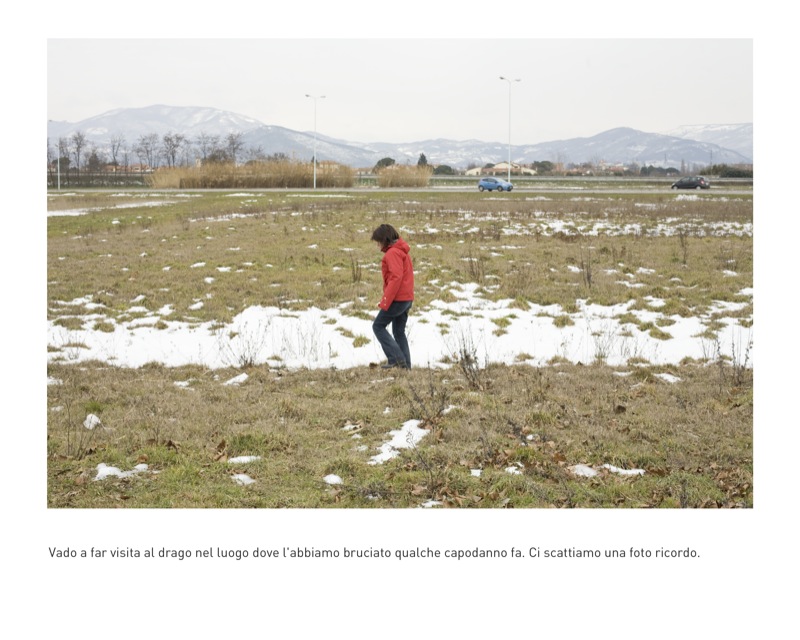
    Every year the Chinese Buddist Association organizes in the city where I live in the celebration of the Chinese New Year. For this occasion in 2012 the Association together with the gallery Dryphoto arte contemporanea, asked to some artists to develop a specific project. When the dragon dances  is the work in answer to this call. It is a series of 18 photos, arranged in 6 groups, resulting from 6 actions I made during the celebration.

    The celebration of the New Year have always impressed me for the simultaneity of the actions going on. Indeed, when the dragon makes its dance, a lot of parallel actions take place (fireworks burns, tables full of food are set up, red carpets are spread out and then rolled up,  doors are opened and closed). The word synchronicity, as described by C. G. Jung, came to my mind.

    So during the celebrations of the New Year, and in the same places crossed by the parade and the dancing dragon, I made some performative actions documented by photographs and a short text.

    All the actions I chose are connected to the idea of  “threshold”, the first moment of perception, a moment or mutual vulnerability and exposition, when a different kind of attention is nonetheless activated. Basically Buddhism rejects the idea of a Self: the Self is not an integral, autonomous entity, being actually a No-Self . The individual self, or the ego, is thought of as a by-product of five functions or aspects that constitute the human being (form, sensation, perception, mental formations and consciousness), all subjected to impermanence.

  • Going Away (Improvisation)

    Going Away (Improvisation)

    Going Away (Improvisation), HD video on DVD, 4’50”

    The discovering of writings and stories coming from what is called “the feminist nebula in Italy in the 70s” [2] is the point of departure of this work.
    The video is composed by three main elements: places, words and bodies.
    The places I show in the video are three buildings that played a significative role for the feminist movement in my own city during the 70s and in the 80s: a former self organized sexual health clinics and two meeting places of feminist groups. Now these places are completely forgotten, being respectively a dressmaker’s shop, a private flat and a garage, and I was able to locate them only thanks to the help of women who took part to the women’s movement in my city.

    The “soundtrack” of the video is composed by a text, made up of fragments from the book Vai pure (Feel free to leave), and Shut up, even talk. Diary of a feminist, written by the former art critic and feminist Carla Lonzi. She was one of the main thinker of the italian feminism, founder of the Rivolta Femminile (Women’s Revolt) group: most of the seminal texts of feminism was elaborated by this group and by Lonzi. In particular they developed the concept of sexual difference and the pratice of autocoscienza. “Man has interpreted woman,” she writes, “according to an image of femininity which is an invention of his . . .” According to her “woman carries out a symbolic revolution by putting herself in the position of the subject.”[1]

    Despite the importance of her theoretical writings, the texts I chose have a more private charachter and came after the theoretical ones: both of these books try to account the attempt to put the woman revolution in practice, reporting all the failures and the contradictions, the feelings of loneliness, guiltiness, fear, anger, envy etc she experiences during her path.

    Indeed one is her daily diary, while the other is a four days long recorded conversation between she and her partner (the artist Pietro Consagra) about their splitting up: it is an oscillation between the need for autonomy and dependency, between exposition and vulnerability, between the fear of disappearing on public sphere and the impossibility of staying.

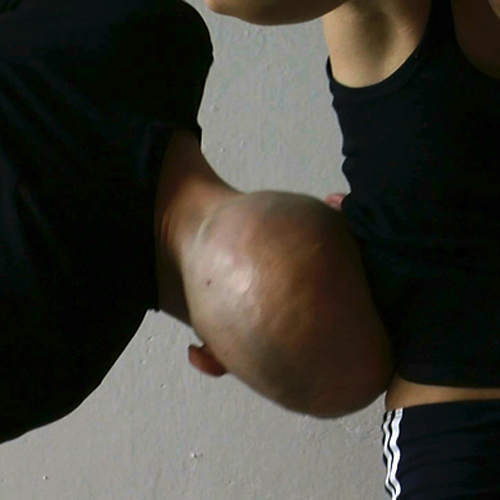
    These oscillations are embodied in the video by the two dancers through a contact improvisation session, with the rule of touching each other’s body mainly by the head; the movements follow the rythm of the words. Contact improvisation dance tecnique was developed in the same years of the Lonzi’s texts, and this dance technique uses points of physical contact to provide the starting point for exploration through movement improvisation.

    Two different voices read the text, by two women of different generations; one, Vittoria Ciolini, being a gallerist and a activist of the feminist nebula in the 70s, now in her sixties, and the other in her thirties, as if she were her daughter or Vittoria at that time.

    The video tries to face with the issues raised by those women who “created the circumstances through which the transformation of the self and others became possible”[2], and with their disappearing, their absence as well: it is both a tribute and an attempt to take them alive.

    Going Away (Improvisation) has been conceived and displayed into the video exhibition curated Posseduti dall’amore,  by Stefano Taccone ( Straniamenti 2011 – Theater and Visual Art Festival directed by Gabriella Maiolo e Adelaide di Nunzio, Roccella Jonica; Spazio Corale, Milan) and in Mulier Mulieris 13, Museo de la Universidad de Alicante, Alicante, Spagna, 2013.

    Video transcript

    You know, what the relationship really is, has never been clarified. Here the relationship is private, two-way, with no witness.It seems to me that culture tends to gather strangers on items which are outward to everyone
    Even art keeps people there open-mounthed thrown on what is suggested to them.
    I felt it as a means of the society to let its members ather without having gazed at one another and feel neverthless inside the culture, the society, several values.
    Distrusted about relations.

    Nobody has ever kept you out, you left yourself out by yourself.
    Nobody has evere kept me out when I was playing the role, I was pretty good in playing the role, can you imagine someone trying to keep me out?

    If man is in power, if he makes an instrument of everything, if he uses everything, it is a man who works. Yet, this is a contradiction of your own, if you want at the same time to be unsettling and to exercise a power.

    And you keep thinking I have to become your partner in crime, otherwise nothing.

    This self-production is not true, it doesn’t exist, we have to come to and understanding on what originality is. It is not anymore that accurate parcelling out of oneself from the context, it is admitting the context. For me it goes as a whole. I have no intention to give up now. Nobody recognizes another for free. One has not interest in it unless it is forced out of him. Unless it is profitable to do so, no one likes to recognize another.

    So far, I believe that is only you confronting with me and you could comfortably give me a kick as you could do to a little dog biting your calves and you throw it away and so I am thrown away.

    But the new point with you is that: you are the conflict too. That is the new situation. We need to check how we can carry it on.

    You know, sometimes you could fear that changing just one thing, everything changes.

    You know where it ends then? If you deny me I am air again, I am speaking air.
    This vanishing distressed me before. I didn’t want that something passed in vain. Now, I myself let go what first I wanted to keep, the meaning of a thing.

    Half reactions, attempts to a different life, revolutions quickly suppressed, uprisings, road demonstrations, utopian projects happen, but suddenly everything is stopped because this condition is unbearable for a whole life. Now we are going to break up and this conversation is full of pain.

    When I feel the impulse to escape I make me the hardest conditions I don’t want to get out. Sometimes I get scared about what I let fall.
    The “against” that comes out now is the culminating point of the dissension.

    Probably the monster behind all our talking is that at this point the man feels he has to put into question his position of power.

    Now all the arguing ends, since I realize that I talk in order to change life and I understand things since I try to change them. The moment I see they are unchangable I don’t know what to add anymore.
    Now go if you wish to go. Now of course go.

    Everything I’ve encountered but that cancelled me, even the gratest of wonders, it doesn’t intrigue me anymore.


    Excerpt from

    Carla Lonzi. Vai Pure, Dialogo con Pietro Consagra (Feel free to go, Conversation with Pietro Consagra). Scritti di rivolta femminile, Milano, 1980

    Carla Lonzi. Taci, anzi parla. Diario di una femminista (Shut up, even talk. Diary of a feminist). Scritti di rivolta femminile, Milano, 1978.

    Translated by Beatrice Passerini.

    References

    [1] Carla Lonzi, Sputiamo su Hegel – We spit on Hegel (Rome-Milan: Scritti di Rivolta femminile, 1970), 37. Translated into English in Patricia Jagenlowicz Mills, Feminist Interpretations of G. W. F. Hegel (University Park, Pennsylvania: Pennsylvania State University Press, 1996), 275 – 298 and in Italian Feminist Thought : A Reader (London: Blackwell, 1991).
    [2] May magazine, Fulvia Carnevale, Entrée en matière, n.4, 06/2010.

  • 3 Pieces

    3 Pieces


    “The most disconcerting things are not those that we have never known, but those that once knew and have since forgotten.” Don’t believe to have any rights, Women’s Library, Milan.

    In June 2010, the French magazine May published a large section of archival material “coming from what is called the feminist nebula in Italy in the 70s” [1]. During the same month Vittoria Ciolini, president of Dryphoto arte contemporanea, a 30 years old contemporary art gallery, asked me to take part to an exhibition in that space. In the 70s and 80s, Vittoria Ciolini was part of the Italian feminist nebula. I decided to work on this feminist nebula for the exhibition in the gallery. I tried to face with the issues raised by those women who “created the circumstances through which the transformation of the self and others became possible” [2], and with their disappearing, their absence as well. Their disappearing, their absence, has became the key point of the work, composed of 3 parts: See you there at nine that takes care of feminist places; Going away recalling words and voices and What a luck to have met you where a disappearing act is performed.

    The work was part of the exhibition let’s keep in touch,  (you may find images and informations here and here) with Augusto Buzzegoli, curated by Eleonora Farina, at Dryphoto arte contemporanea, 2011.

    Here is the catalogue, with texts by Vittoria Ciolini and Eleonora Farina.

    See you there at nine  (3 ink jet prints on paper, 76×100 cm)

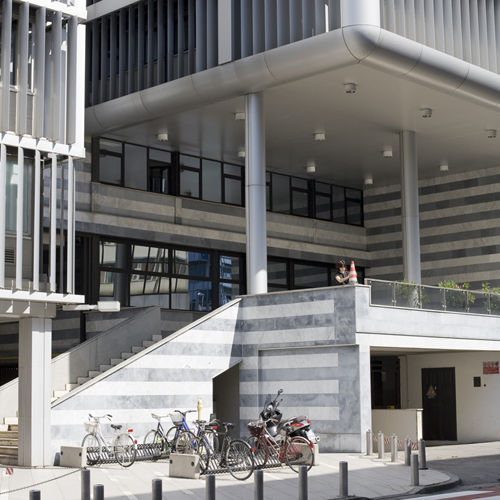
    Thanks to the help of the women who took part to the feminist movement in my city, I discovered a former self organized sexual health clinics and two meeting places of feminist groups (Consultorio A.E.D, Collettivo Femminista and Pulsatilla group). These places played a significative role in the 70s and in the 80s but now they are completely forgotten, being respectively a  dressmaker’s shop, a private flat and a garage. I went in front of these places for several days and tried to reestablish the lost relation.

    Going away (HD video on DVD, 5’25”)

    VadoVia-Inst

    The second piece directly uses the words of Carla Lonzi and stages them through the voice of Vittoria Ciolini. A text, made up of fragments from the book Vai pure (Feel free to leave), is performed by Vittoria Ciolini.

    The book is a 4 days long recorded conversation between the feminist and art critic Carla Lonzi and its partner (the artist Pietro Consagra) about their splitting up: it is an oscillation between the need for autonomy and dependency, between exposition and vulnerability, between the fear of disappearing and the impossibility of staying.

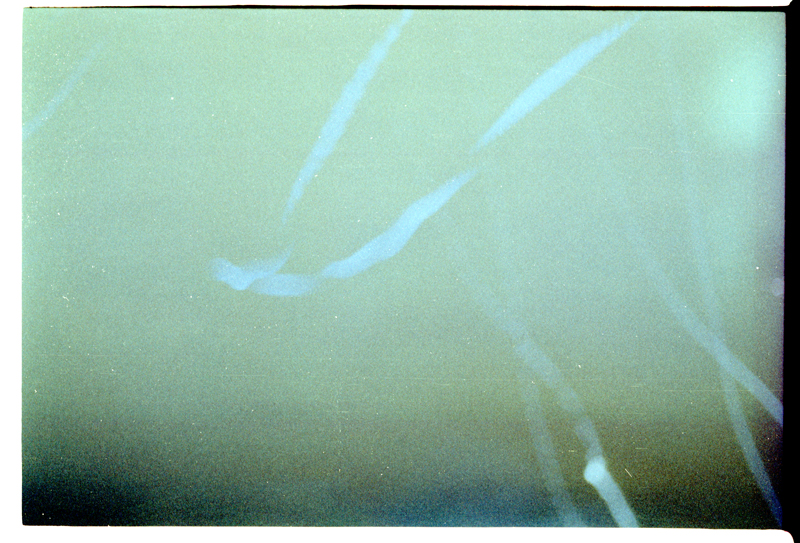
    Together with the video I displayed a text telling about a night I spent outside in the attempt of abandoning the known for the unknown. I captured this action leaving the shutter of the camera permanently open: a day before the exhibition I decided to not include these images into the exhibition, and I still wonder why.

    MANIFESTO

    7 febbraio.
    February the 7th.

    Sono le 6 di mattina. La notte è finita, e anche l’azione.
    It’s 6 a.m. Night is over, and so is the action.

    Che cosa ho fatto? Sono stata fuori tutta la notte cercando di sbilanciare qualcosa.
    What have I done? I spent the whole night out trying to push things off-balance.

    Cercavo uno spazio altro, non l’ho trovato, le cose sono sempre le stesse.
    I was looking for a different space, I haven’t found it, things are always the same.

    L’unico spazio è stato il mio movimento. Almeno così mi sembra ora.
    The only space was my movement. At least so it seems to me now.

    Non potevo restare ferma, ma ci ho messo troppo accanimento, troppa intenzione,
    sono stata troppo ansiosa per questa mostra.
    I couldn’t stay calm, but I was too persistent, the action was too deliberate,
    I was too anxious about this exposition.

    In ogni caso stare fuori mi ha calmata, se ora sto bene con i miei dubbi,
    un qualche strato di tensione se ne deve essere andato.
    In any case, staying out for a while calmed me down, in that now I feel confortable
    with my own doubts. Few layers of tension maybe must have gone by now.

    Che cosa che ho fatto?
    What have I done?
    Se nto la voce di Vittoria e le parole di Carla Lonzi e mi sembra utile.
    I heard the voice of Vittoria and the words of Carla Lonzi and I find them useful.

    Ci avrò messo abbastanza attenzione, abbastanza cura?
    Had I paid enough attention? Enough care?

    Ho fatto tutto il possibile per essere in pari, e abbandonare, andare via.
    Che cosa ho dimenticato?
    I did all I could do to be at measure, and leave, go away. What did I forget?

    Cercavo una circostanza un pretesto per espormi. Mi sono trovata ferma
    tra l’andare e il restare.
    I was looking for an excuse to expose myself.
    I found myself caught between leaving and staying.
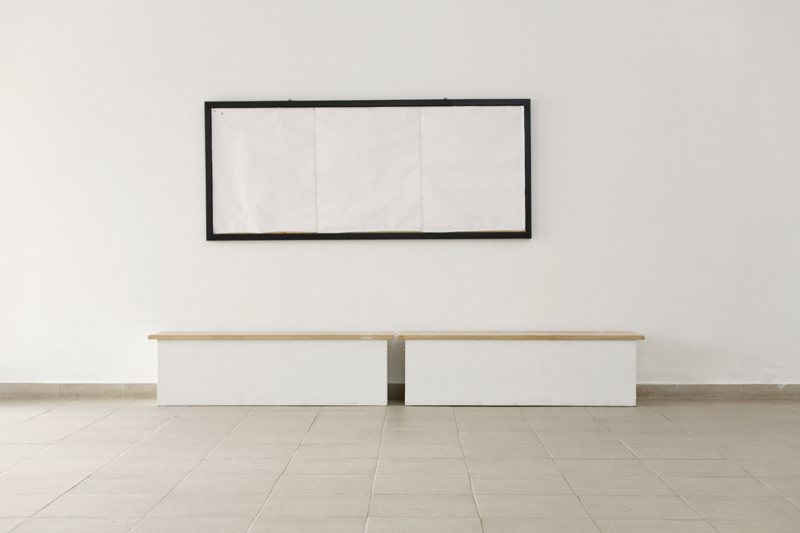
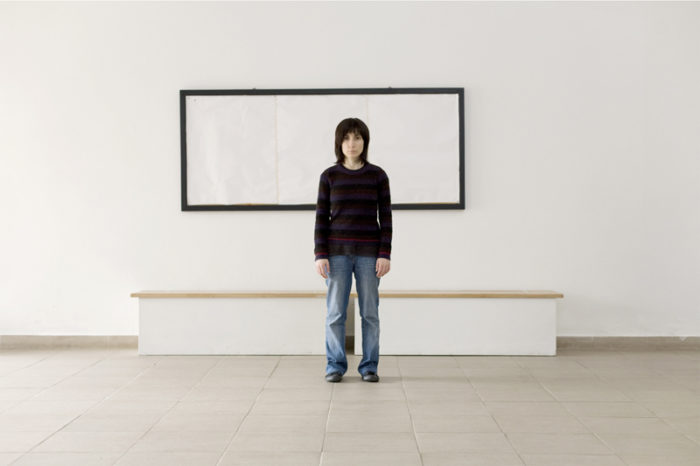
     What a luck to have met you  (3 color prints, 30×45 cm)

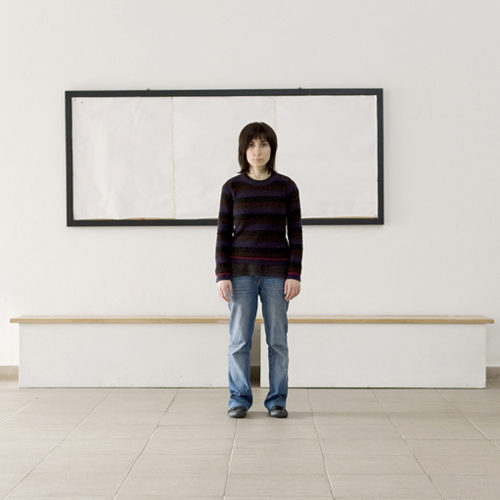
    A sequence of three photos describes my act of disappearing. An empty place is first shown, then with me in the center, and finally left empty again. What has changed? What’s left?

    The place chosen is a center for Chinese medicine and Qi Gong founded by three women that met each other in feminist groups.
    During the exhibition the piece What a luck to have met you has been stolen from the gallery: thanks to an unknow person the disappearing acts goes on!
  • Freelance work

    Freelance work

    Bandolo, stills da video

    Freelance work is an installation made up of a video (Bandolo – Spool) and a series of photographs (Piccola Impresa – Little Enterprise), about the issue of work.

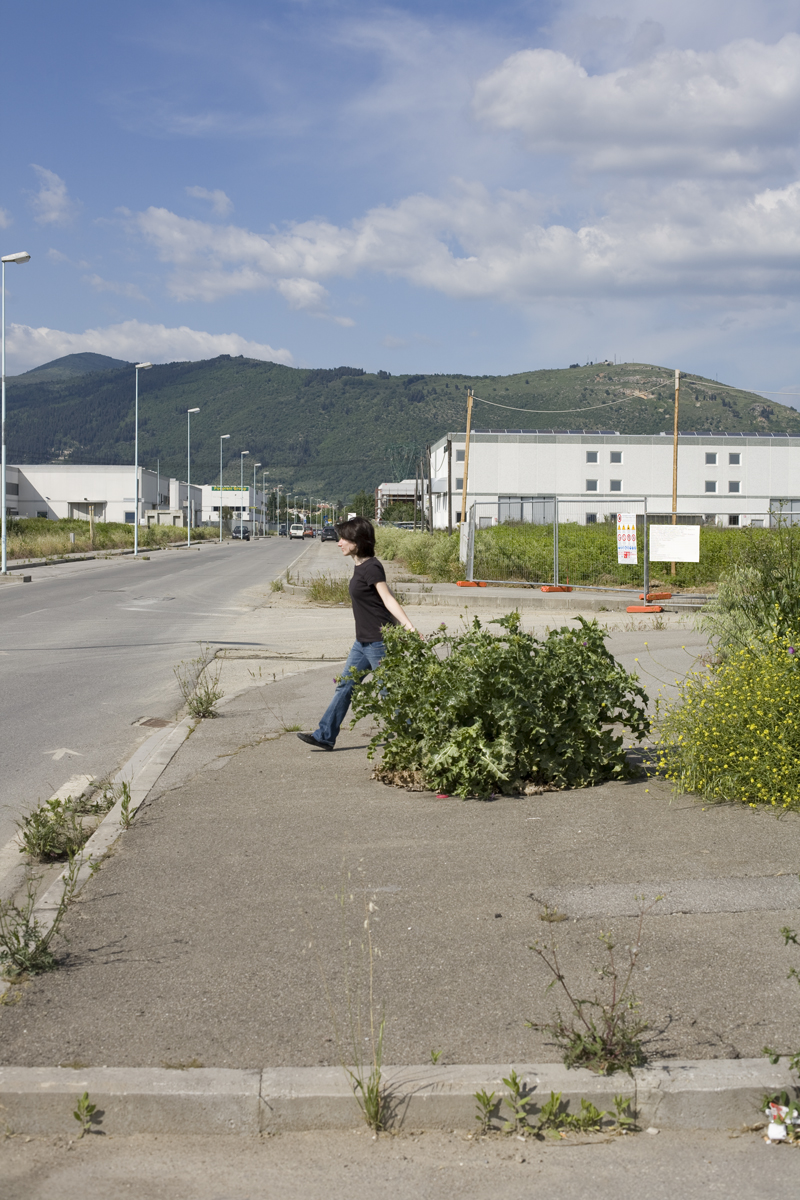
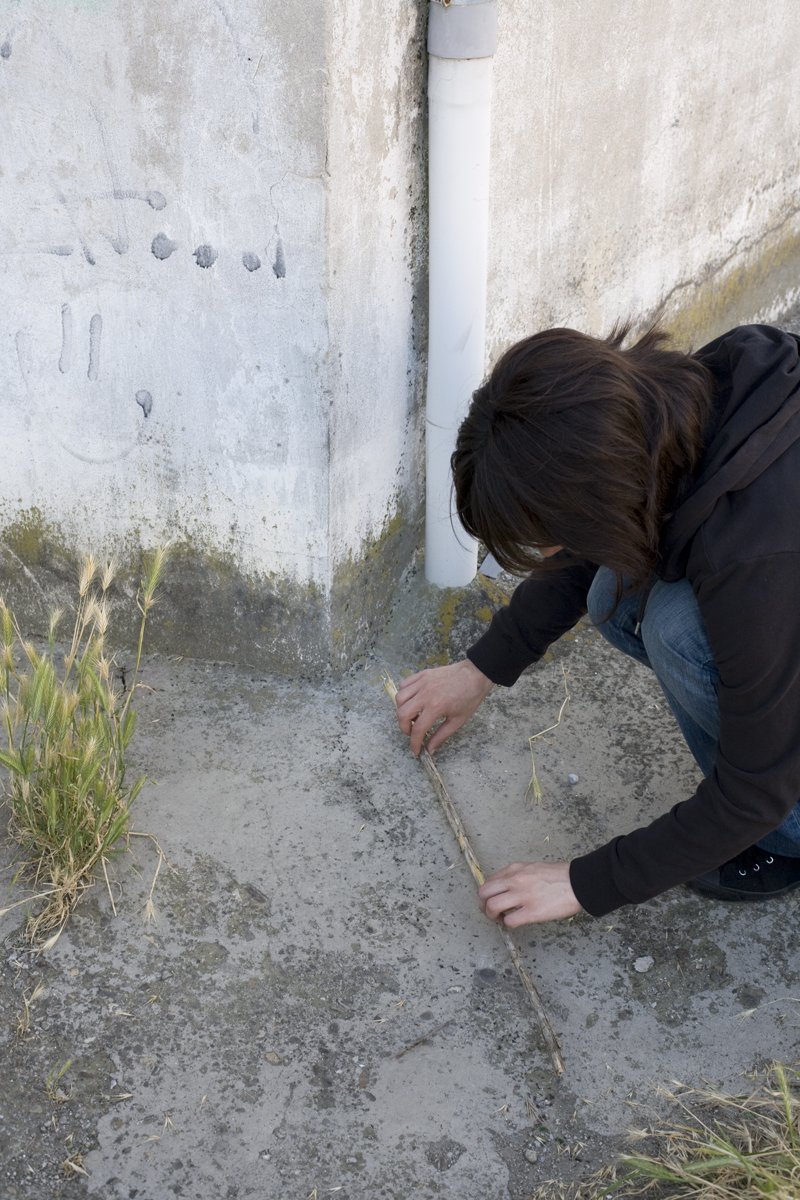
    Little Enterprise. Looking for a personal answer to the question ‘What does working mean?’ I engaged myself in a series of actions relating to the idea of working. In the photographs I staged minimal actions interacting with space, attempting to modify the setting in which I found myself in. The actions are set in the public space, used as both background and a raw material. All the actions were performed in Prato, a town that has built its own identity upon textile factories. However, in the last 15 years this image has been challenged by the textile and economic crisis, facing with the globalization of the market. For the same reasons in the video I play with a peculiar object of the textile industry, a spool.

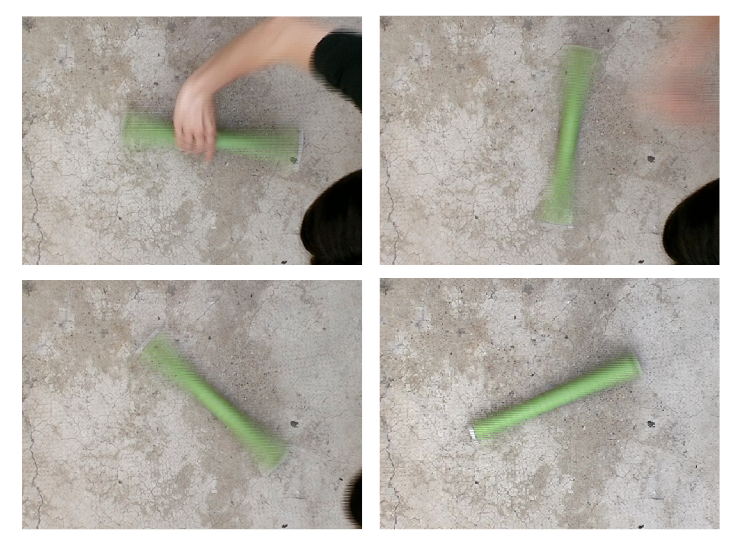
    Bandolo (Spool)The video Bandolo (Spool) documents the game I played with a peculiar object of the textile industry, a spool, by turning its proper vertical axis of rotation into an horizontal one. In this way the spool is used as a potential wheel of fortune, following the mistery of the economy: the hope for dreamed gains and the fear for cruel losses are bound to its turning.

    This work won the Special award 2010 and it has been displayed in the International Departures 11 exhibition , Modena, 2011, acquired in the Fondazione Fotografia permanent collection.

    Working on a conceptual footing, Valentina Lapolla’s work is developed in an ongoing dialogue with reality, highlighting the problems and the contradictions which – from a local to a national/global level – concern the community at large. Her actions and performances are often set in the urban space, in direct relationship with city life. In the installation Lavoro Autonomo, made up of a video and a series of photographs, the artist comes to terms with the work and its value, marked today by a profound sense of precariousness. The action staged by the artist are minimal gestures interacting with space, uncertain attempts to modify the setting in which she find herself. Bereft of any immediate goal, or of the usual context of social norms, Lapolla’s interventions attempt to breathe new life into the work looked upon as a transformation of reality, playing on the limit within which it is possible to invent new spaces of freedom.

    Excerpt from the catalogue of the exhibition International Departures 2011, Modena

  • SenzaDimoraFissa

    SenzaDimoraFissa

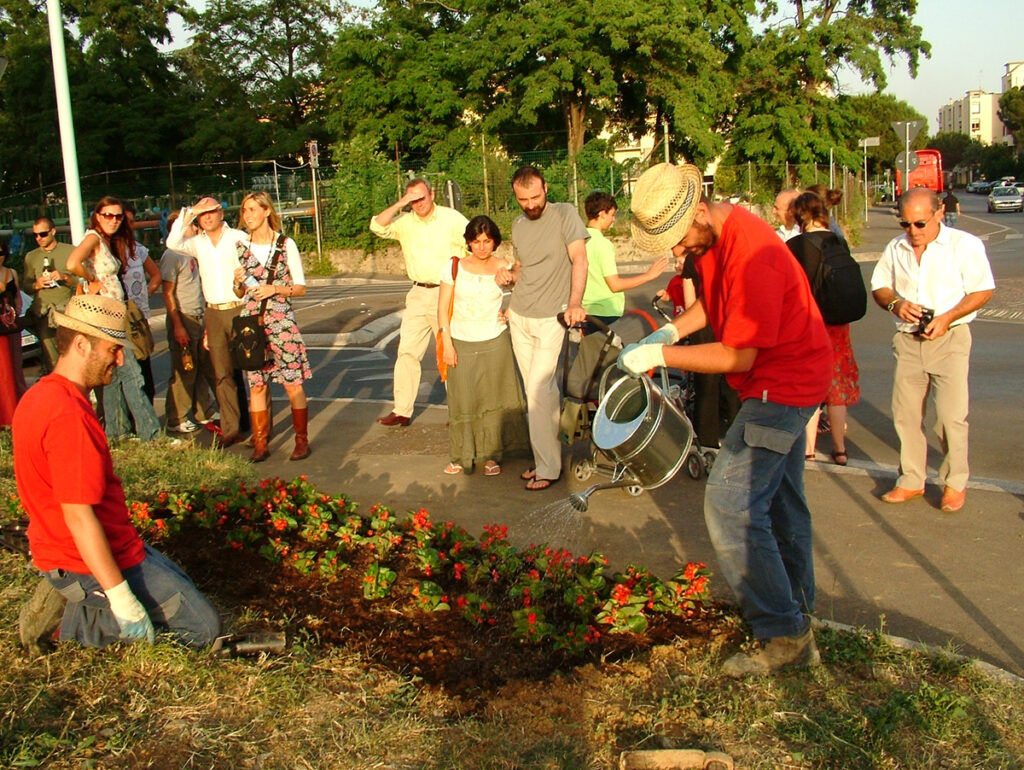
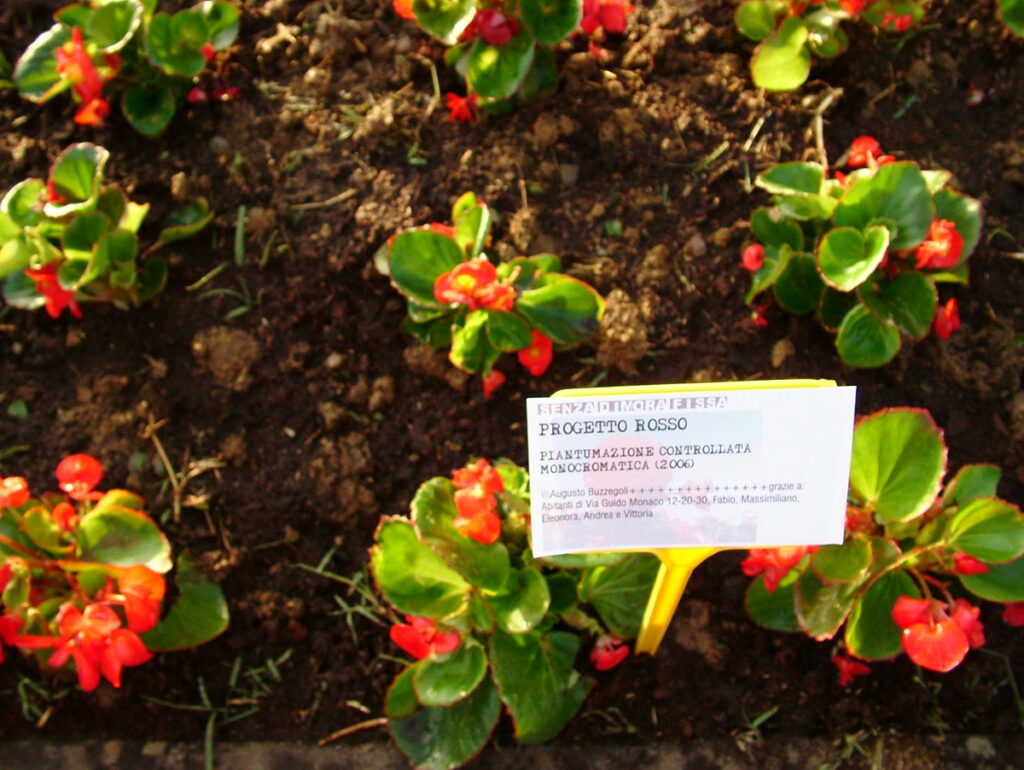
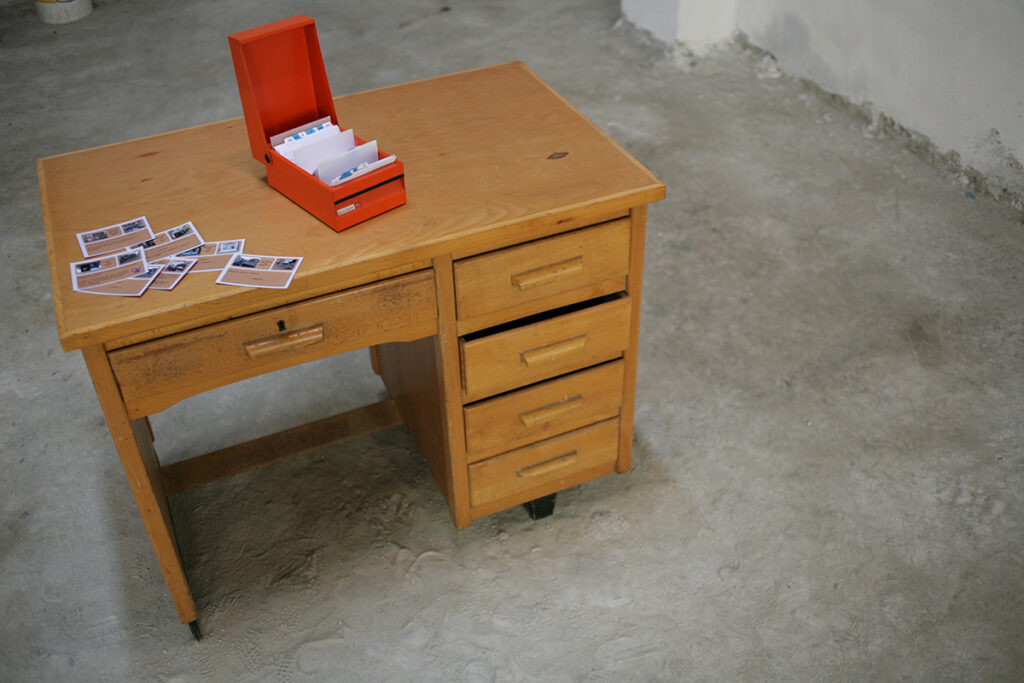
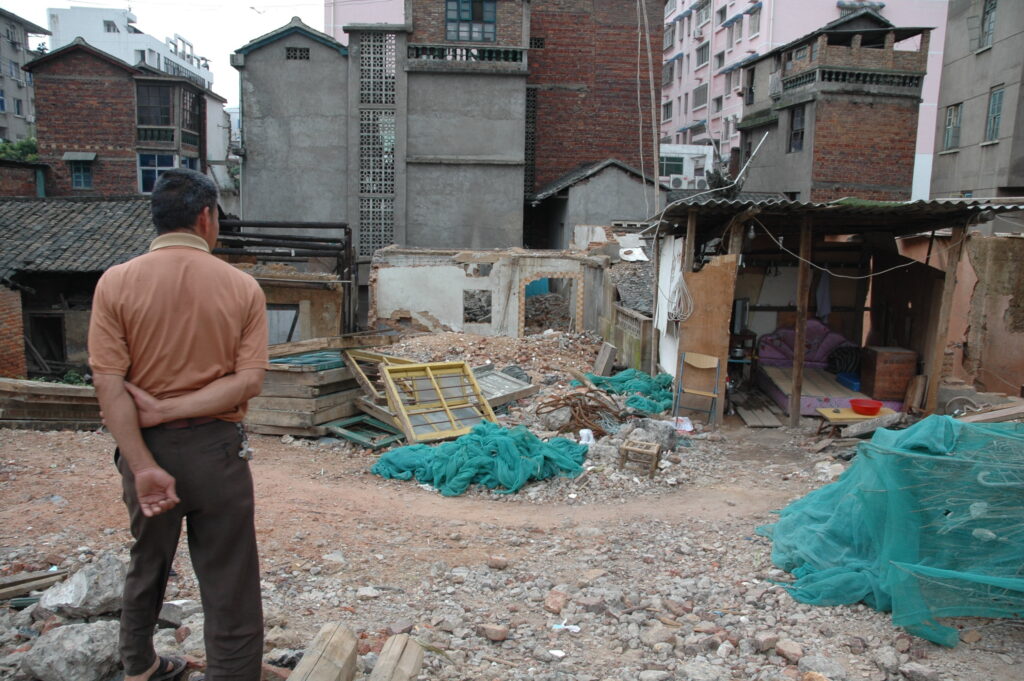
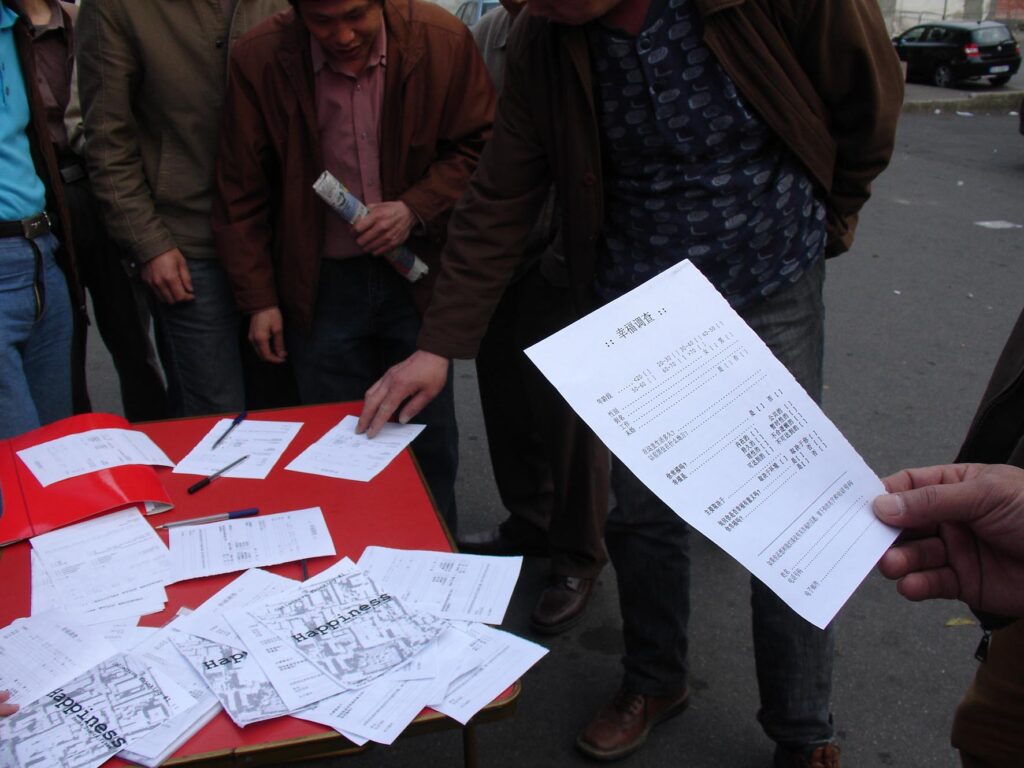
    SenzaDimoraFissa was a temporary and experimental collective laboratory active in Prato between 2006 and 2009, initiated by Andrea Abati and Dryphoto Arte Contemporanea as a platform investigating the relationship between artistic practices and the urban environment. Conceived as a starting point for mapping “the city of the many,” the project brought together artists working through listening, observation, conviviality, and site-responsive interventions within the social fabric of the city.

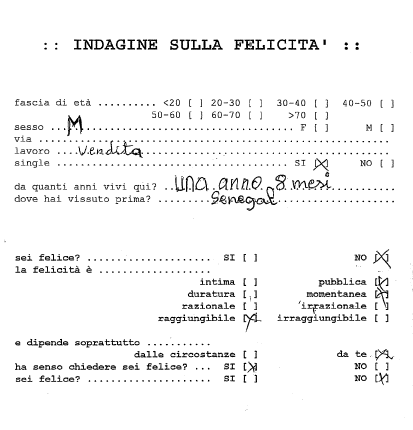
    Through exhibitions, urban actions, and collective research, Senza Dimora Fissa approached the city as a shared field of inquiry and imagination, exploring questions of citizenship, migration, belonging, and urban transformation. The first major outcome of the project was macrolotto_zero (2006), followed by Chinese New Year (2007), a series of artistic interventions developed in response to debates surrounding the visibility and presence of the Chinese community in Prato.

    Participants included Andrea Abati, Simone Bizzi, Augusto Buzzegoli, Stella Carbone, Vittoria Ciolini, Alessandro Colzi, Diego Doretti, Alex Lin, Silvia Masi, Luca Sguanci and myself.

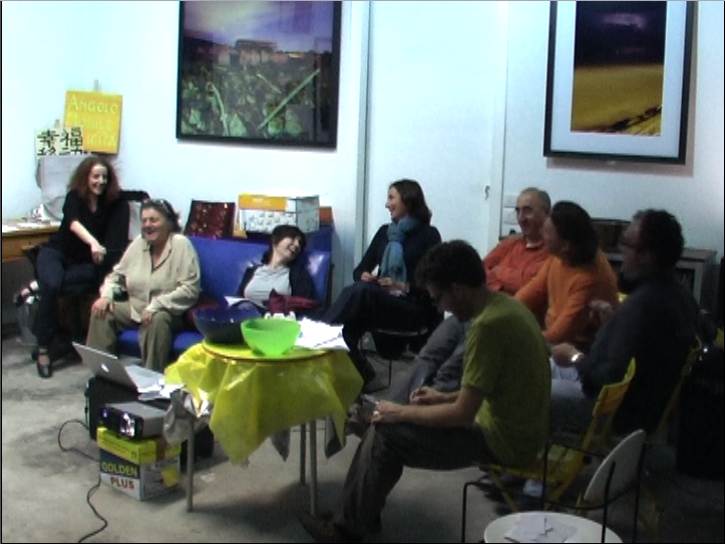
    As part of Raccolte / Archivio Aperto by Dryphoto Arte Contemporanea, I recount the experience of Senza Dimora Fissa in this video (in Italian). Here the slides.

    Projects

    17.06/2006 macrolotto_zero curated by Daria Filardo @Dryphoto arte contemporanea – Trattoria Ars Libandi – Monash Univeristy Prato Centre – Doner Kabab – Giardini di via Colombo – Via delle Segherie, Prato

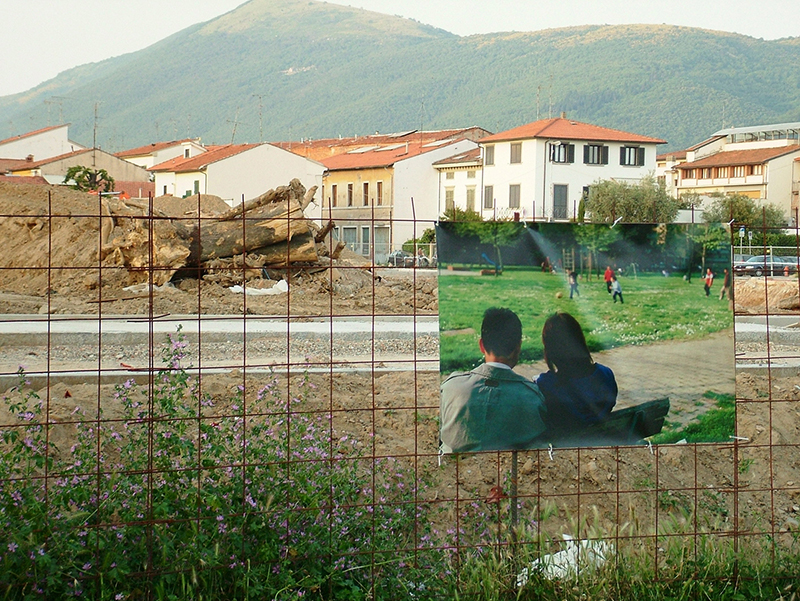
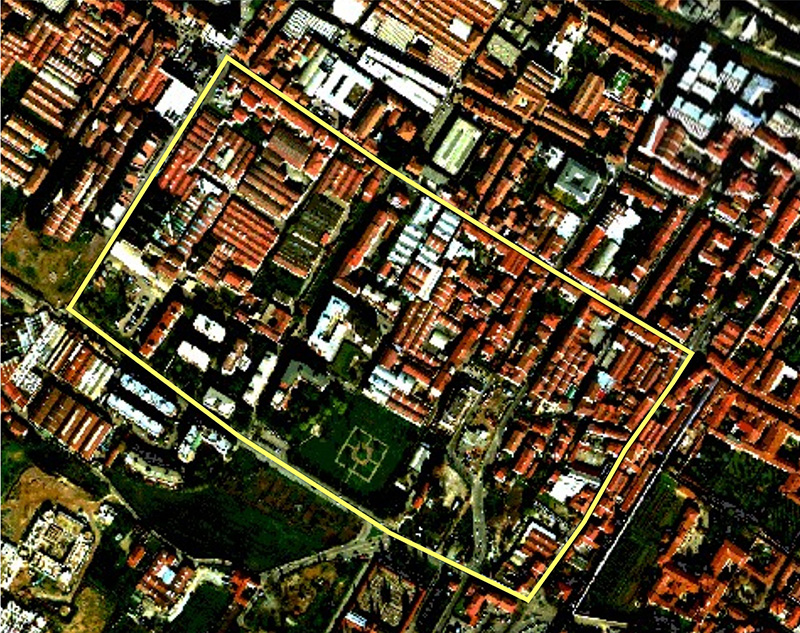
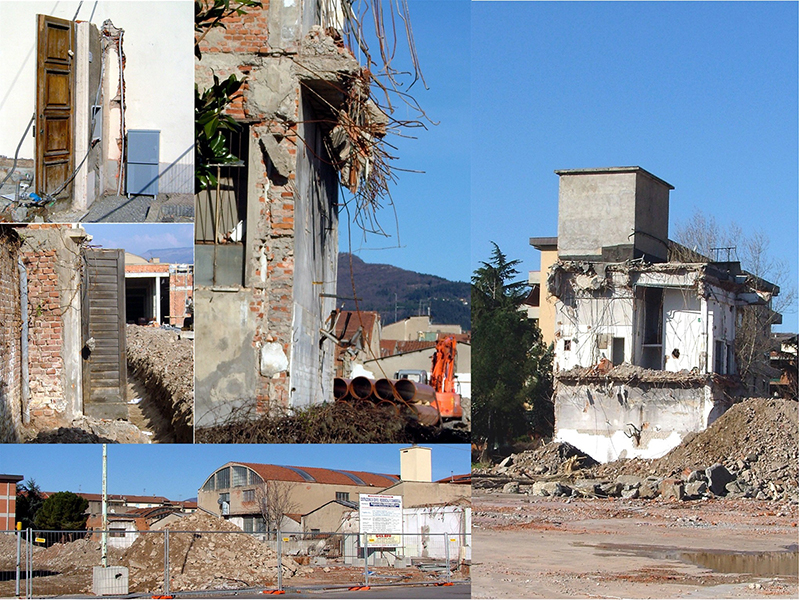
    macrolotto_zero was a collective project developed in 2006 within the rapidly transforming district of the same name in Prato, an area where industrial spaces, residential buildings, and the city’s Chinese community coexist. Through walks, observations, images, videos, and site-specific actions, artists used the neighborhood itself as a shared field of inquiry. Here the publication and the map. ph. Andrea Abati.

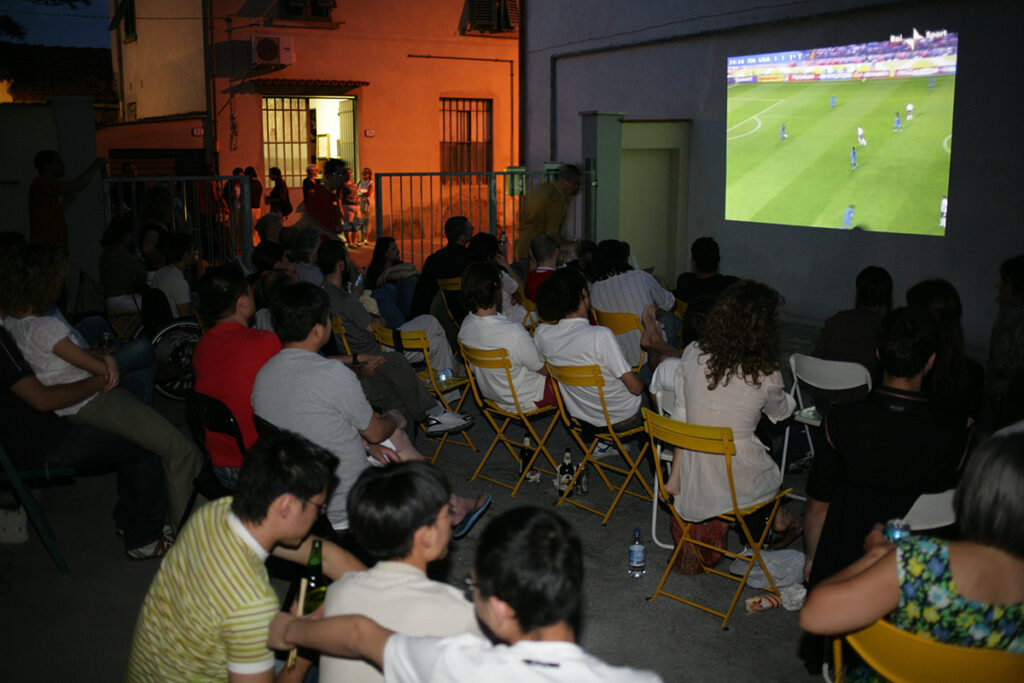
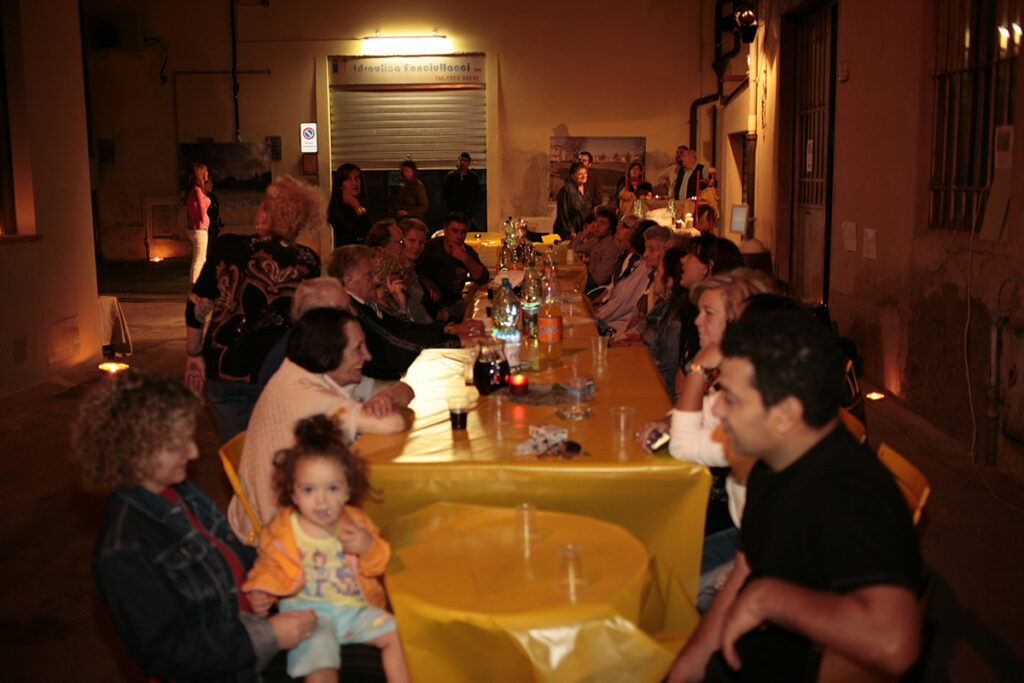
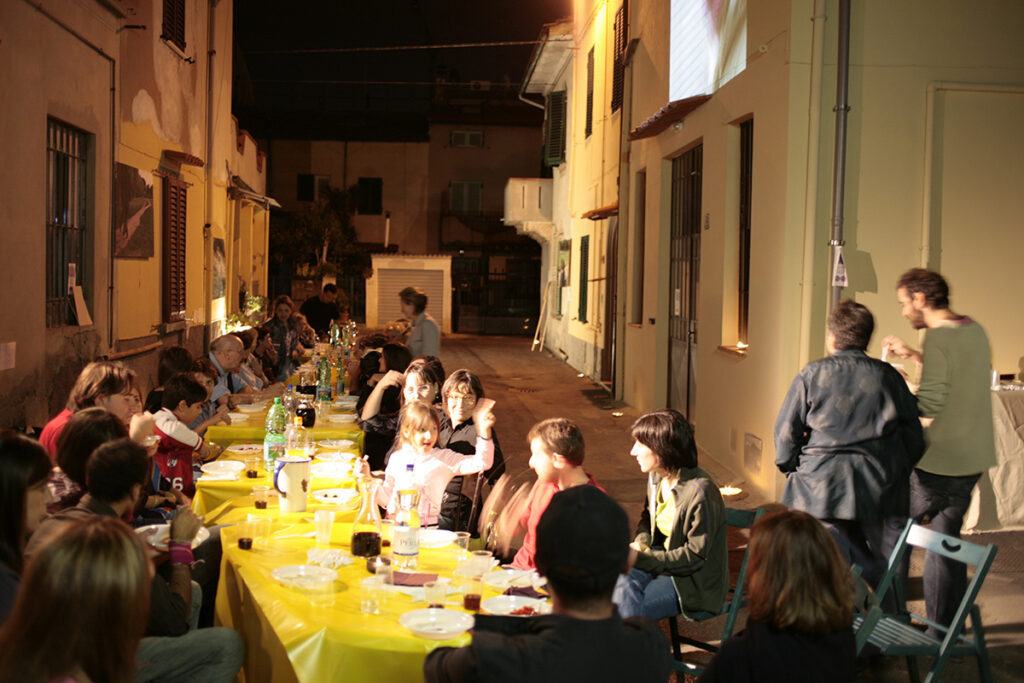
    2007 @via delle Segherie, Prato, Convivial Interventions and Neighbourhood Gatherings

    A series of convivial events organized in Via delle Segherie, Macrolotto Zero.

    18.02/2007 @via Pistoiese, Prato, Chinese New Year

    Chinese New Year was a series of public actions organized by Senza Dimora Fissa in response to the decision of the Prato municipal administration to relocate the traditional Chinese New Year celebrations to the local contemporary art museum, away from the city. Conceived as a reflection on visibility, belonging, and the right to public space, the project included urban interventions, distributed images, and a performative action by Augusto Buzzegoli, who slowly walked the route of the cancelled Dragon Parade, temporarily reactivating its presence through an act of public dissent.

    2006/2008 Exhibitions and Partecipations

    Arcipelago, Isole nella rete, curated by M. Chini e F. Galluzzi, Firenze, 16/02/2007 Sashall Firenze // Genti età luoghi Comune di Prato – Archivio Fotografico Toscano – Dryphoto Arte contemporanea – Istituto Ernesto De Martino // Europa Presente. Identità, differenza, relazione curated by Stefano Taccone, Napoli, 2008 // Cities from below a curated by Marco Scotini, a project for Teseco per l’arte, Pisa, 2006/2007, Capodanno Cinese in Chto Delat? installation, Common house#3. // Strong End Weak End – nella città che sale curated by Pier Luigi Tazzi 19.20/01/2008

  • Ossobuco

    Ossobuco

    DSCF3576-M-res

    Ossobuco, composition of images, 2009

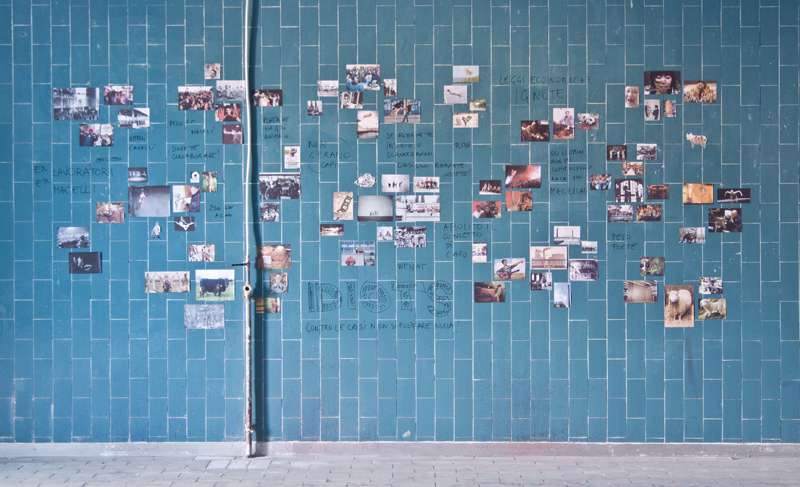
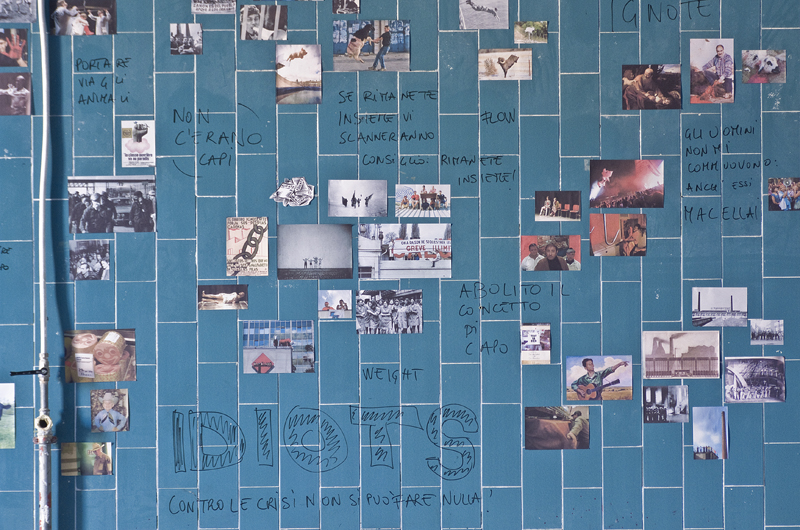
    Between 2009 and 2010 I developed a series of works made by arranging together a big number of images into a multipattern structure. A high number of images different in size and proportion are arranged onto the surface of the wall following multiple mixed criteria, as thematic or visual patterns, chains of free associations, metaphoric or literal, as well as repetition of shapes, lines and colours. The relationship between subject and object, the combination of simultaneity and consecution that makes possible the understanding still preserving complexity, the productive potential of shifting back and forth between different perspectives, are what interested me to explore through this series of works.

    Ossubuco is one of them and has been conceived during the workshop Networking held by the artist Pavel Braila. The workshop venue was the former public slaughterhouse of our city, now converted into a cultural space. The subject of the workshop was slaughtering.

    DSCF3564-M-res

    The work started from a conversation I had with a group of retired workers of the slaughterhouse: during the conversation what surprised me was their approach to labour, based on a non hierarchical organization, on a collaboration that not needed a boss to work and they were really proud of. Starting from that I went ahead in making connections between slaughtering and class struggle.

    I used all of these thoughts and feelings to set up a composition of images: by means of visual correspondences and pattern matching I tried to activate in the viewer multiple paths of meaning, and to question the brute and violence of the power structure of economics.

    _DSF2595-M-res

  • Camouflage

    Camouflage


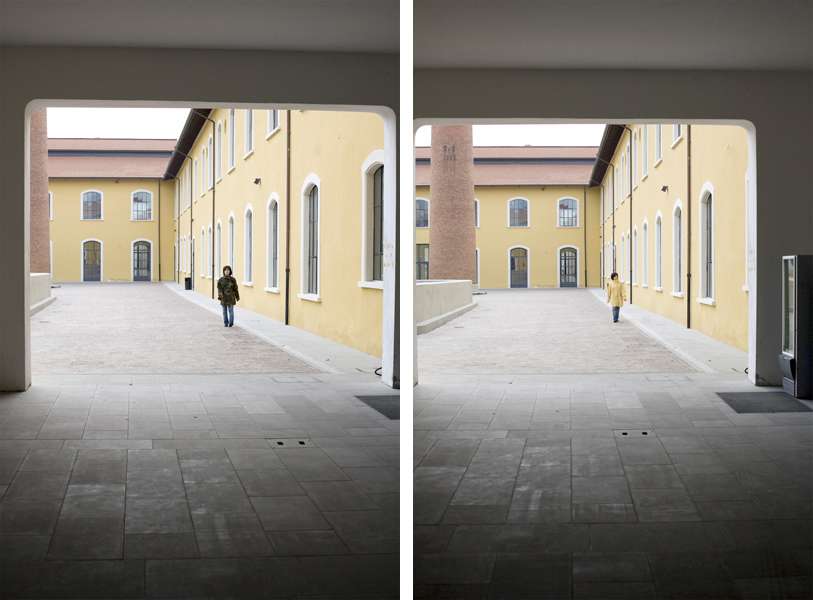
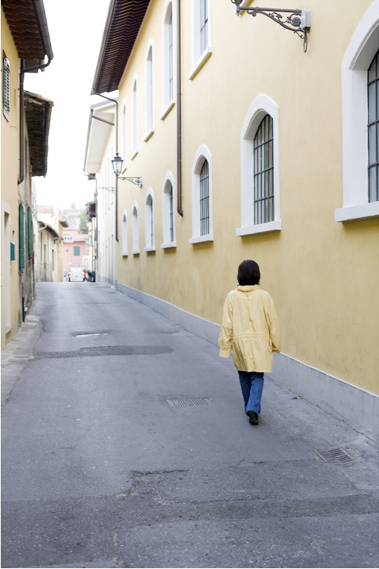
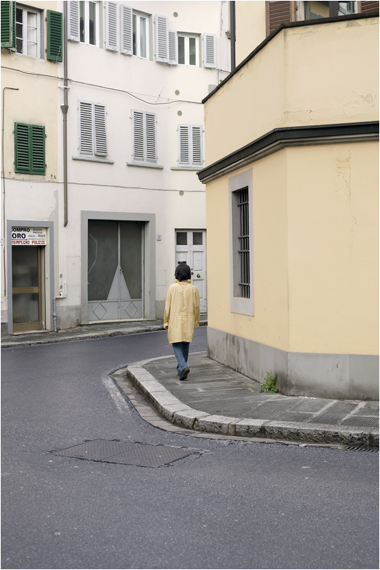
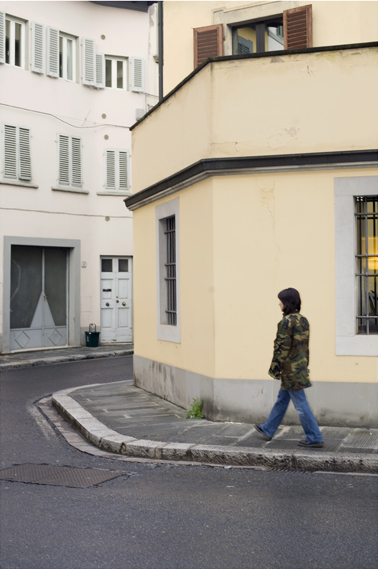
    Camouflage, 10 color prints, 18×12 cm, 2010

    Groups of soldiers wearing camouflage uniforms have been wandering around in my own city center since the end of 2009.

    They were called by the local administration, whose winning campaign exploited local fears of a “Chinese invasion”,  to play a role in the war for public security.

    The economic tensions between the Italian residents and Chinese people, actually about a quarter of the town’s population, mostly involved in manufacturing textiles and cheap clothes, is grounded on the accusations that the migrants aren’t playing by the rules, and has turned in a war for urban security. But according to italian law, a soldier can’t have any public order function.

    The camouflage uniforms worn by the soldiers in a historical medieval city center, the most of facades being painted in a light yellow, are actually a sign of visibility.

    In a second hand shop I bought two suites, an Italian army jacket and a yellow-beige trench coat, and walked in the town center wandering around with one jacket and the other, alternatively mimicking the soldiers and the camouflaging act.

  • Some Photographic Works

    Some Photographic Works

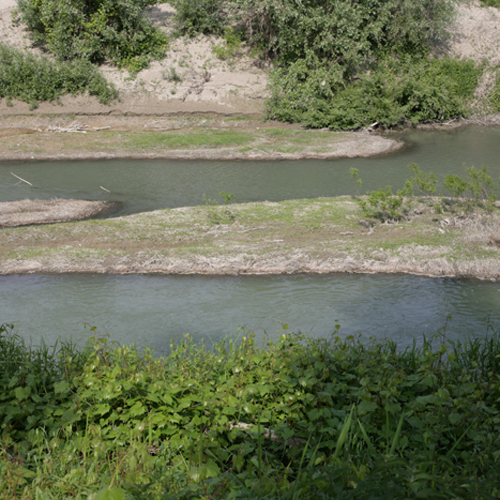
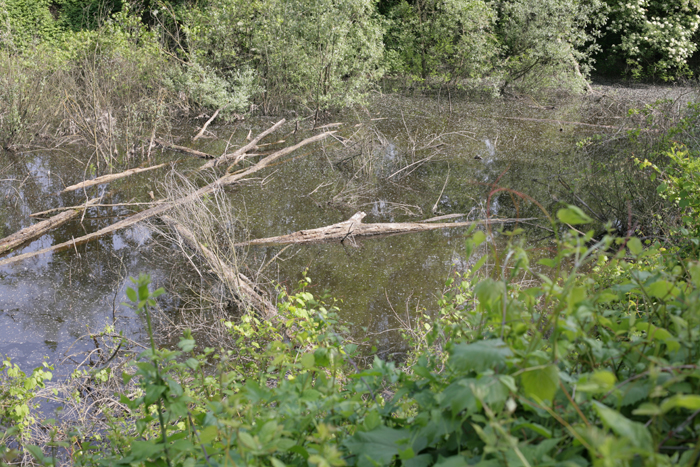
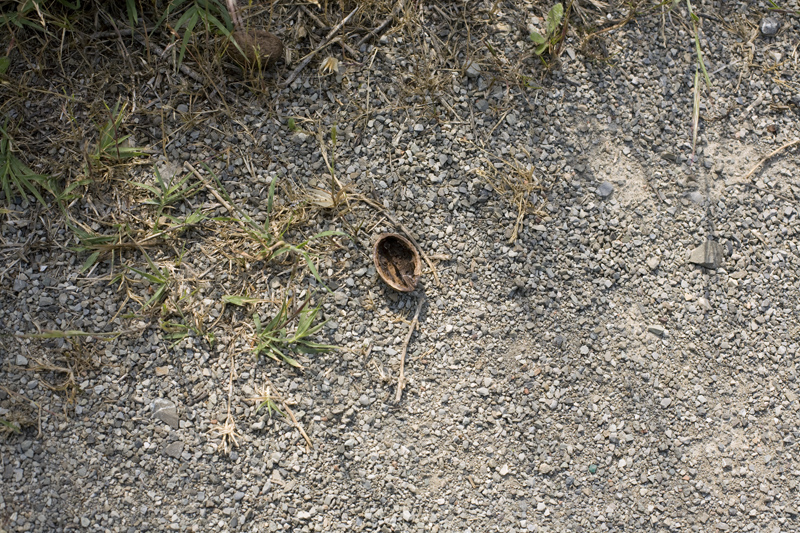
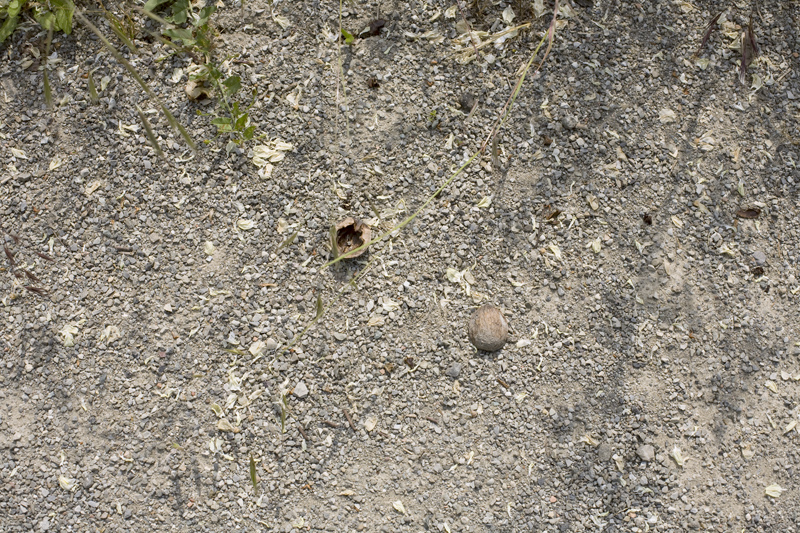
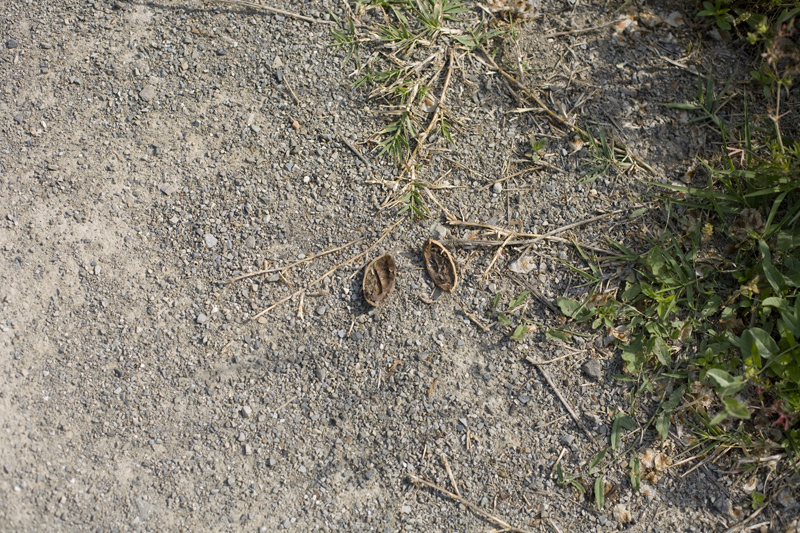
    Nutshells, 6 color prints, 20×30 cm, 2011

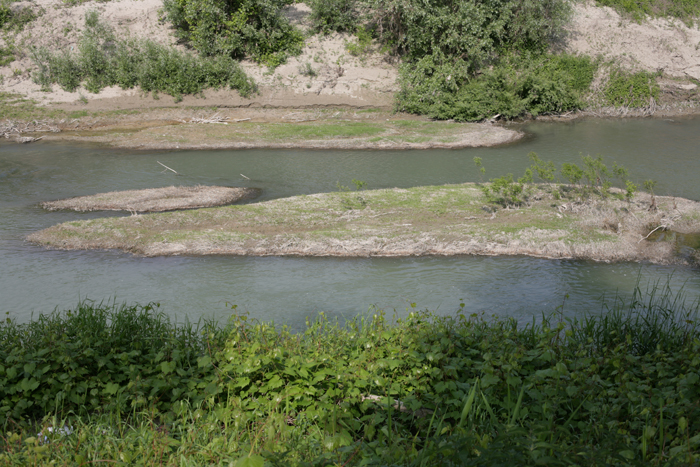
    This work has been done during the workshop Analytical anima(l), with the artist and photographer Olivier Richon, concerning animals and their representation. The workshop took place in a big farm, with a big enclosure in the middle where we can photograph the animals.
    Actually during the afternoon, I got lost, and found myself walking on a white road and along a little river, the border of the farm. It was very hot and I was thirsty and hungry, and, instead of photographing animals, I discovered myself and my camera acting like a little animal in search for food (roadside nuts) and water.


    Genoa, July 2001, analogue color photographs, 2011

    In July 2001 the italian city of Genoa hosted the G8 summit and a dramatic protest against the Group of Eight’s legitimacy and authority. At that time I was part of a student group sharing most of the issues raised by the antiglobal movement, and we took part to the protest. It was the first time I experienced the violence as intrinsic of modern democracies foundation and organization: since then I’ve changed my way of thinking, no more being able to view the power authority (whatever it is) as legitimate, and I realized the necessity to find other places of action, deserting those where I was expected to stand.
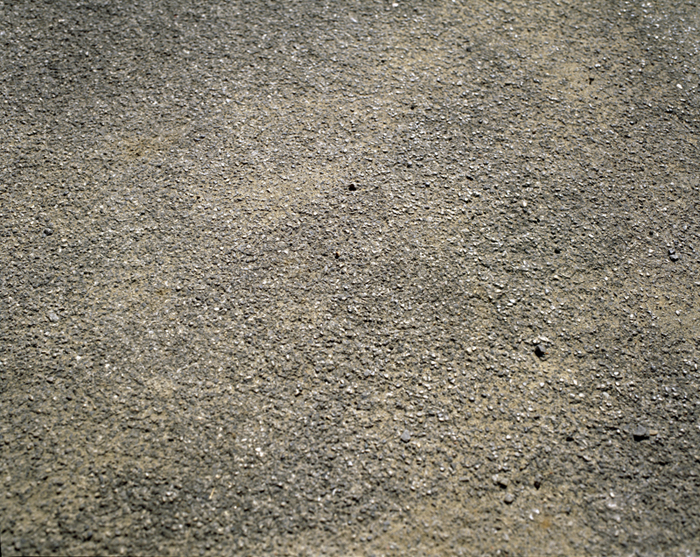
 Ten years later, remembering those days and the hot road asphalt, I find myself staring at the ground, feeling an increasingly pression on my back, realizing clearly to be subjected to gravity, slowly approaching the ground as if I were carrying a huge weight. This forced position, resembling the one the police dictated to the protestors, allows me to see the ground in all its physical presence.

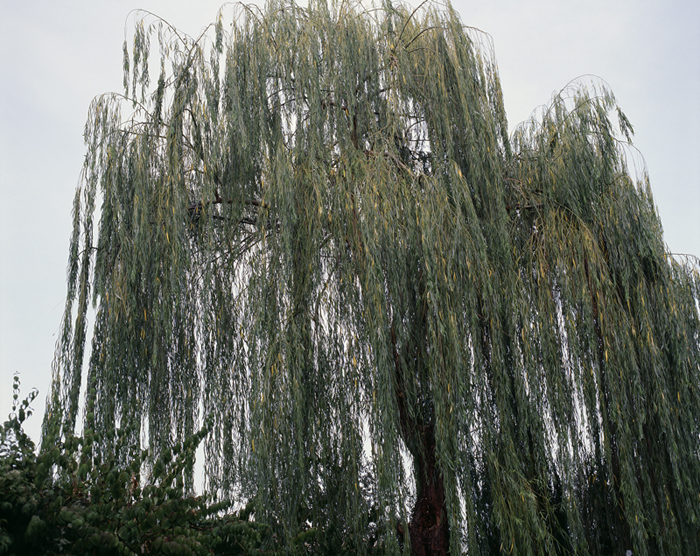
    Passer le temps, my own private Godot, 2 color photographies, 2011

    ESTRAGON:(despairingly). Ah! (Pause.) You’re sure it was here? VLADIMIR: What? E: That we were to wait. V: He said by the tree. (They look at the tree.) Do you see any others? E: What is it? V: I don’t know. A willow.
    S. Beckett – Waiting for Godot


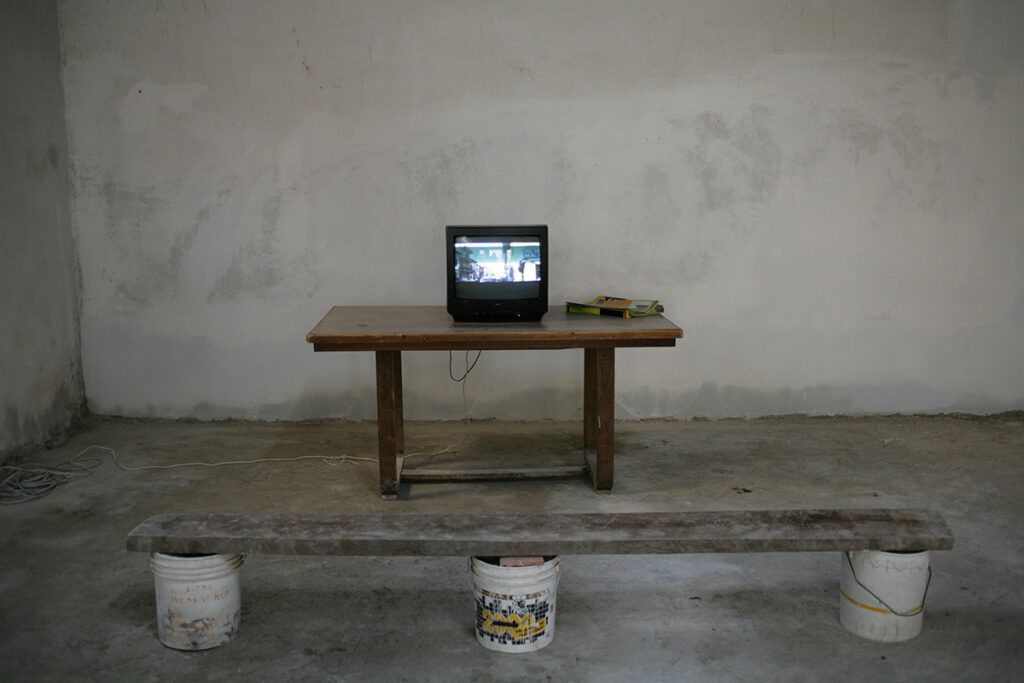
    In Beckett’s piece Waiting for Godot a willow tree is the only presence marking the space where Godot is expected to come. Moreover this tree is, in the same vague way, a sign of time by its changing foliage according to seasons. My camera and I came back two different times to look at a willow tree, to experience the same concept of time of the theater piece, a time that is not a linear progression but, through variation and repetition, is more concerned with a spacial permutation, where different configurations of the elements and their spacing defines the rythm.
    “The altered sameness” obtained by looking at the willow tree once and again (“Next day. Same time. Same place, You again!”) and the spacing between the two images shot is my personal restaging of the piece’s sense of time.

  • Early Video Works

    Early Video Works

    Sofia, video, 4’25”, 2008

    This video has been conceived during the workshop ‘Second Escape’ held by the artist Robert Pettena. We were asked to explore the neighborhood and this video documents an encounter I made during the exploration. Trying to illegally enter in an abandoned textile factory I met a Chinese little girl and her father that decided to help me.

    The girl’s name was Sofia and we shared a bold exploration of this intriguing place.

    Monsoon Story, video, 3’25’’, 2007

    This story started in 2006 when I attended a conference where a meteorologist said that the mild climate of our region was going to be turn into a monsoon climate due to the climate change.

    In the same period I met a Chinese boy migrated with his family in Prato from a monsoonal region. It seemed to me that his presence here and his friendship can mitigate the gravity of the climate change impact or in other words make us change as the the climate. The video is meant to be at the same time a waiting and a rescue.

    with: Alex Lin, Luca Sguanci; photography and camera: David Becheri, Emanuele Tassi

    This is the 3-channel integral version

    Monsoonstory

    https://vimeo.com/324205632

    and this is the short 1-channel version

    Selfportrait, video, 3’00’’, 2006

    This work has been realized during the workshop by the artist Renate Aller, held in Prato in december 2006. The workshop was focused on the idea of selfportrait. I chose to reflect on the concept of a selfhood in the feminism tradition and in particular on the ideas developed in the Adriana Cavarero’s book Relating Narratives: Storytelling and Selfhood. Here the philosophy of the self is built through the story told to the other and reflected by the other, leading to selfhood as a narratable self. This idea can be the starting point in developing a new concept of identity, where this is not an innate quality, but a relational practice, that only the other can give back to us.

    In the video the images of the dialogues I had with some friends (one by one) taking place in daily situations and of which I decided to leave out the sound, , alternate with close ups of my body dancing in abstract excessive and plastic colors.